


In 2026, the fight for bookings in Thailand will be fiercer than ever.
Not because people stopped traveling. Quite the opposite. The world is traveling again with intensity. But travelers have changed. They are more cautious with money, more selective with time, and far more technologically empowered than before.
The modern guest arrives armed with AI tools, price alerts, travel forums, and endless inspiration feeds. They compare destinations instantly. They read dozens of reviews before breakfast. And if your property doesn’t clearly stand out within seconds, they move on.
At the same time, global uncertainty, from geopolitics to inflation, has made travelers more careful about how and where they spend.
The result is a new hospitality landscape: demand is strong, but attention is scarce.
For hotels, resorts, and luxury villas across Thailand, the opportunity remains enormous. But success in 2026 will belong to properties that adapt quickly - those able to position themselves clearly, distribute intelligently, and communicate their value to a traveler who now evaluates everything.
Understanding the forces reshaping travel is the first step.

1. A Volatile Global Travel Environment
The global travel industry has entered a period of ongoing instability. Political tensions (especially in the Middle East), economic shifts, and fluctuating consumer confidence are reshaping how and when people travel.
According to the International Monetary Fund, global economic uncertainty reached multi-year highs in 2025, a trend expected to continue into 2026.
This uncertainty does not eliminate travel demand, but it changes traveler behavior.
Recent booking data across global markets shows clear patterns:
- Travelers are booking closer to arrival dates.
- Trips are becoming shorter.
- Guests are comparing more destinations before committing.
Search data from the travel industry shows that over 57% of bookings in 2025 were made within 28 days of arrival, up significantly compared with previous years.
This means the traditional booking curve is collapsing.
For hospitality businesses in Thailand, agility will matter more than ever. Properties that monitor demand signals in real time and adapt pricing, promotions, and availability quickly will consistently outperform competitors.
2. Southeast Asia Is Rising, And Thailand Is Right at the Center
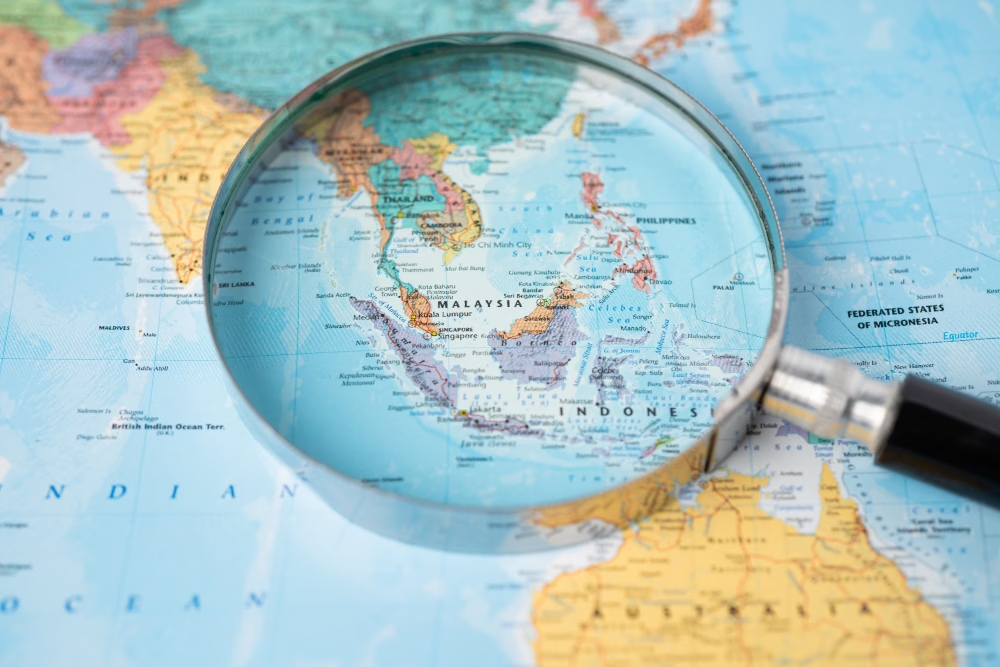
While parts of the global travel market face volatility, Southeast Asia is entering a strong recovery phase.
Demand for travel across the region continues to grow, driven by several structural shifts: affordability compared with Western destinations, improving airline connectivity, and the return of Asian outbound tourism.
Thailand remains one of the biggest beneficiaries of this shift.
According to the Tourism Authority of Thailand, the country welcomed over 28 million international visitors in 2023 and is targeting 40 million arrivals by 2025–2026, approaching pre-pandemic levels.
Demand growth is particularly strong from China, India, and Southeast Asian markets.
At the same time, travel platforms report increasing daily demand growth for destinations across the region, including Thailand, Vietnam, and Sri Lanka.
For Thailand, this means competition will not only come from neighboring villas or resorts, but from entirely different countries.
Travelers today compare Phuket with Bali, Koh Samui with the Maldives, and Krabi with Vietnam’s coastline. The decision happens online long before the trip begins.

3. Travelers Are Avoiding Crowds and Rediscovering Shoulder Seasons
Overtourism has become one of the defining travel conversations of the decade.
From Barcelona to Venice, crowded destinations have pushed travelers to rethink when and where they travel.
Consumer surveys show:
- 34% of travelers actively seek quieter destinations
- 31% plan to travel during shoulder seasons instead of peak months
These shifts are already reshaping travel patterns worldwide.
For Thailand, this creates an interesting opportunity.
Traditionally, the peak travel season runs from December to February. But travelers increasingly explore Thailand during shoulder months like May, September, and October, especially digital nomads, wellness travelers, and long-stay guests.
Luxury villas and boutique properties that design experiences around these quieter periods can capture high-value demand outside the traditional season.
4. Currency Value Is Driving Destination Choice
Economic pressure rarely stops people from traveling. It simply makes them more strategic.
When currencies fluctuate, travelers search for destinations where their money goes further.
Japan provides a recent example. A weaker yen triggered a surge in inbound tourism as international travelers suddenly found the country more affordable.
Thailand benefits from a similar dynamic.
Compared with Europe or North America, Thailand continues to offer strong value for luxury travel. Private villas, beachfront resorts, and wellness retreats remain far more accessible here than in many Western destinations.
This price-to-experience ratio is one of Thailand’s most powerful competitive advantages.
But value alone does not guarantee bookings.
Travelers must first discover the property, and understand why it is worth choosing.

5. Short-Term Rental Growth Is Slowing
For years, the short-term rental market expanded at remarkable speed worldwide.
However, governments across major destinations are now tightening regulations.
Countries including France, Spain, Italy, and South Korea have introduced restrictions, licensing systems, or taxation aimed at controlling the rapid growth of vacation rentals.
As a result, global listing growth slowed from 11% to around 6.5% in 2025.
Thailand’s regulatory landscape remains more complex and localized, but enforcement in some destinations has already increased.
This shift may actually benefit professionally managed villas and hospitality brands.
As regulation increases globally, travelers are increasingly drawn to properties that appear trustworthy, well-managed, and clearly positioned.
Professional marketing and strong brand identity are becoming decisive advantages.
6. Accommodation Is Now the Experience
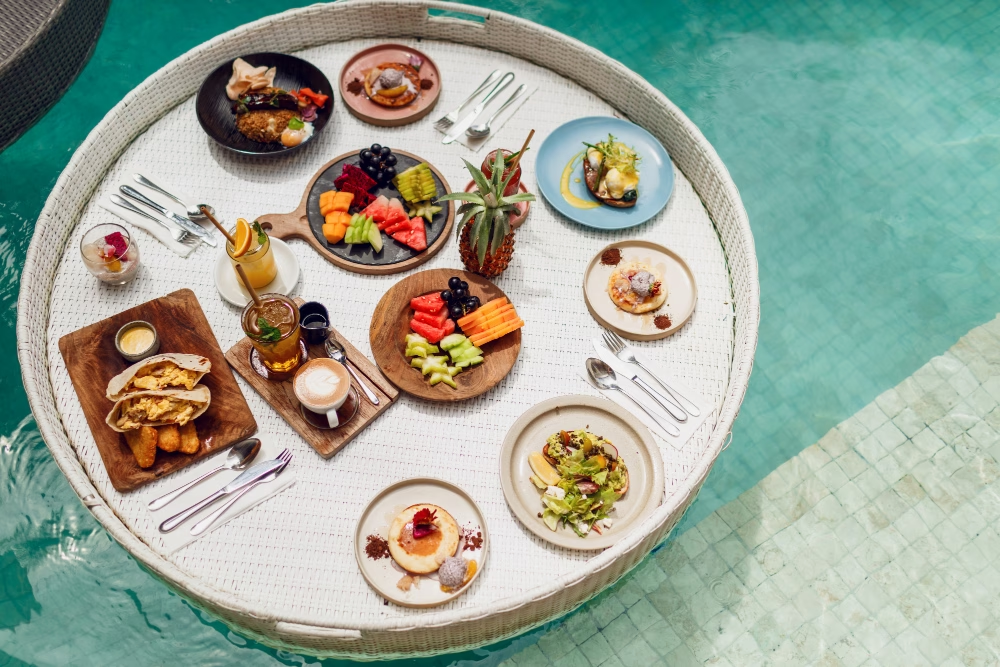
For many travelers today, the place they stay is no longer simply accommodation.
It is the destination.
Research from the travel platform Skyscanner found that 45% of travelers choose a destination specifically because of where they can stay. Among Generation Z, that number rises above 60%.
Luxury villas, boutique resorts, and design-led hotels benefit enormously from this shift.
A remarkable property, whether an oceanfront villa in Koh Samui, a jungle retreat in Krabi, or a minimalist architectural hideaway in Phuket, can become the centerpiece of the trip.
At the same time, wellness travel continues to rise rapidly.
A survey by Hilton found that 56% of travelers say their main motivation for travel is rest and recovery, while affluent Asian travelers increasingly prioritize wellness-oriented stays.
This trend aligns perfectly with Thailand’s strengths: spa culture, nature, hospitality, and private villa living.

7. The Rise of "Destination Dupes"
A fascinating trend is reshaping global travel demand: the rise of "destination dupes".
Instead of visiting crowded or expensive hotspots, travelers search for places offering similar experiences at better value.
Albania has emerged as a lower-cost alternative to Greece.
Vietnam increasingly competes with Thailand’s beach destinations.
Sri Lanka is gaining popularity among travelers who once chose Bali.
Thailand itself often plays both roles.
For many Western travelers, it remains the more accessible alternative to the Maldives. For regional travelers, it competes with Bali or Vietnam.
This constant reshuffling of travel preferences means destinations can rise, and become saturated, very quickly.
Properties that establish visibility early capture the greatest advantage.

8. AI Is Reshaping Travel Discovery
One of the most profound changes in travel is happening quietly inside search engines and booking platforms.
Artificial intelligence is becoming the new travel planner.
According to Skyscanner, 54% of travelers already feel comfortable using AI to plan trips, while younger travelers are even more confident.
Meanwhile, major platforms such as Booking.com and Expedia are integrating generative AI tools to assist with search and booking.
Instead of browsing dozens of websites, travelers increasingly ask AI systems to recommend destinations, compare properties, and even build complete itineraries.
This changes how visibility works online.
Properties must not only appeal to human travelers. They must also be structured so algorithms can interpret them clearly-through strong descriptions, consistent data, and structured content.
In the coming years, hotels that are not AI-visible may simply disappear from discovery.

9. Social Media Is Becoming a Booking Channel
Travel inspiration and travel transactions are merging.
Platforms like Instagram and TikTok are increasingly integrating booking tools directly into their ecosystems.
At the same time, platforms like Airbnb are expanding beyond vacation rentals to include boutique hotels and hospitality experiences. (Airbnb Listing Optimisation: The 5 Airbnb Mistakes Quietly Killing Your Bookings)
The result is a fragmented distribution landscape.
Guests may discover a property on social media, compare it on an OTA, research reviews on Google, and finally book through a website, or through an AI assistant.
Visibility across these touchpoints has become critical.
See our Social Media Services

10. Personalization Is Becoming the Standard
The modern traveler does not want a generic stay. They want an experience tailored to their preferences.
High-end travelers increasingly expect options such as:
- private chefs
- wellness experiences
- workspace setups
- room attributes like ocean views or private pools
Hotels and villas that structure their offerings around these specific attributes can increase both perceived value and revenue.
This approach, known as attribute-based selling, allows properties to move beyond standard room categories and offer guests exactly what they want.
The New Reality for Hospitality in Thailand
The travel industry remains one of the most resilient sectors in the global economy.
People will always seek experiences, escape, and connection.
But the rules of visibility and competition have changed.
In 2026, the properties that succeed will not simply be the most beautiful. They will be the most discoverable, the most clearly positioned, and the most responsive to changing traveler behavior.
For luxury villas, boutique hotels, and hospitality brands across Thailand, the opportunity is immense.
But so is the competition.
And in a world where travelers search with algorithms before they ever arrive on a beach, the battle for bookings begins long before the journey itself.
Discover about our Marketing Services for Hotels and Holiday Villas