


Here is a quiet truth about property development. By the time the first brick is laid, the fate of many projects is already decided. Not because of construction. Or because of architecture. But because of marketing strategy-or the absence of it. Luxury property development marketing strategy is often the invisible factor that determines whether a project succeeds or fails. By the time the first brick is laid, many developments are already set on a path defined not by construction, but by how well the market has been understood.
Developers often think marketing begins when the property is ready to sell. Or believe that the RE Agencies will do the work better.
In reality, the smartest developments begin marketing before the project even exists.
Because real estate marketing is not simply promotions. It is market alignment based on a market research. And when that alignment is missing, even beautiful properties struggle to find buyers.

Luxury Property Development Marketing Services
For developers who understand that demand should be engineered before construction begins, we design marketing strategies that turn projects into sought-after investments.
Discover our property development marketing services

1. Luxury Property Development Marketing Strategy Starts With the Buyer
Many developers begin with a vision: A stunning villa, or a modern condominium, or maybe a lifestyle residence overlooking the sea.
But the question that should come first is rarely asked: Who exactly is going to buy this? For who are you building it? Of course you build it first of all, to get a profit, but without understanding who's your customer, you'll have to forget about your profits.
At the lower end of the market, mistakes here can sometimes be corrected through price adjustments. At the luxury level, the consequences are much harsher.
Because ultra-high-net-worth buyers are not looking for a nice property that the developer said will bring 20% ROI (without any researches most likely). They are looking for something that fits their identity, their lifestyle, and their investment logic.
That is why serious developments start with buyer persona research- a process that identifies where the buyers live, how they travel, how they discover properties, and what motivates their purchasing decisions.
Without that research, marketing becomes guesswork.
This is where a luxury property development marketing strategy begins - with clarity on the buyer.
Related posts:
AI in Property Development Marketing: How to Turn Renders into High-Converting Ads
Koh Samui property business: How we set up a real estate business in Thailand

2. Luxury Property Development Marketing Strategy Is Not an Afterthought
Another common error is budget timing. Many developers allocate most of their capital to construction and only later begin thinking about marketing. But marketing is not decoration, it's the infrastructure.
Industry benchmarks show that developers typically allocate around 1–2% of the project’s total revenue to marketing and sales activities across the lifecycle of a project. (dmrmedia.org)
In competitive or luxury markets, the number can climb higher. Marketing expenses for real estate projects often fall between 2% and 4% of the total project value depending on complexity and competition. (BusinessDojo)
And for ultra-luxury estates, marketing budgets can reach 1–3% of the property value, sometimes even 5% for exceptional listings because of the cost of high-end media production, events, and global promotion. (Macro Webber)
This is not waste, or a fancy expense - It is the cost of building trust before the buyer even visits the property.
A luxury property development marketing strategy is not an afterthought, it is part of the project’s foundation.
Related posts:
GTM Engineering: How to Build a Hospitality or Real Estate Business That Actually Works
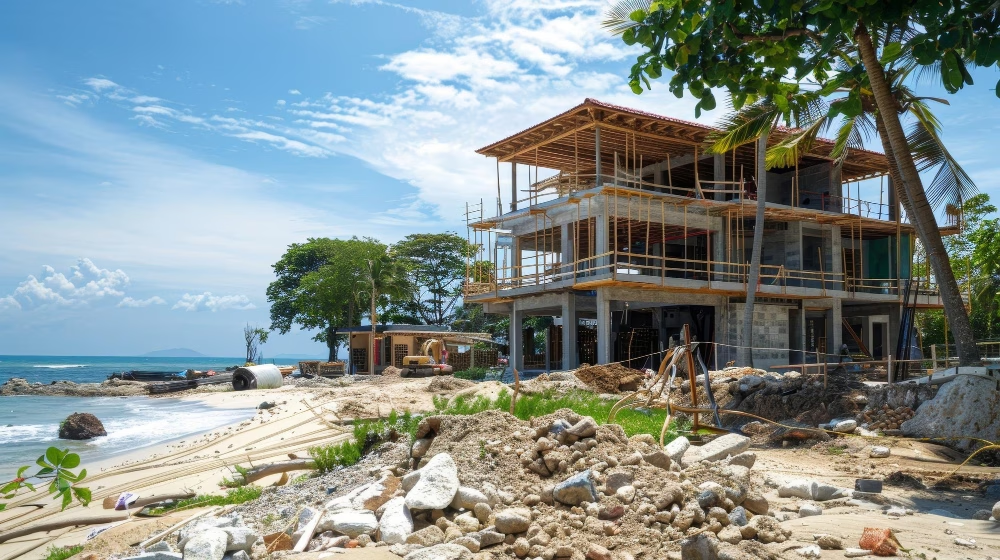
3. Selling the Property Instead of the Story
Luxury real estate behaves differently from the rest of the market, especially when working with international buyers.
When someone buys a 100-million-baht villa, they are not buying square meters. They are buying a narrative. The narrative might be privacy, status, a tropical lifestyle, or a strategic international investment. Marketing must therefore communicate more than architecture. It must communicate meaning.
This is why luxury developments invest heavily in render animation and cinematic video, editorial photography, and storytelling-driven websites. These elements help potential buyers imagine not just the property - but the life they could live inside it.
Without that narrative, even the most beautiful villa becomes just another listing in a sea of listings.
Related posts:
Real Estate Marketing vs Lead Generation: What Property Developers Actually Need to Sell More Units?
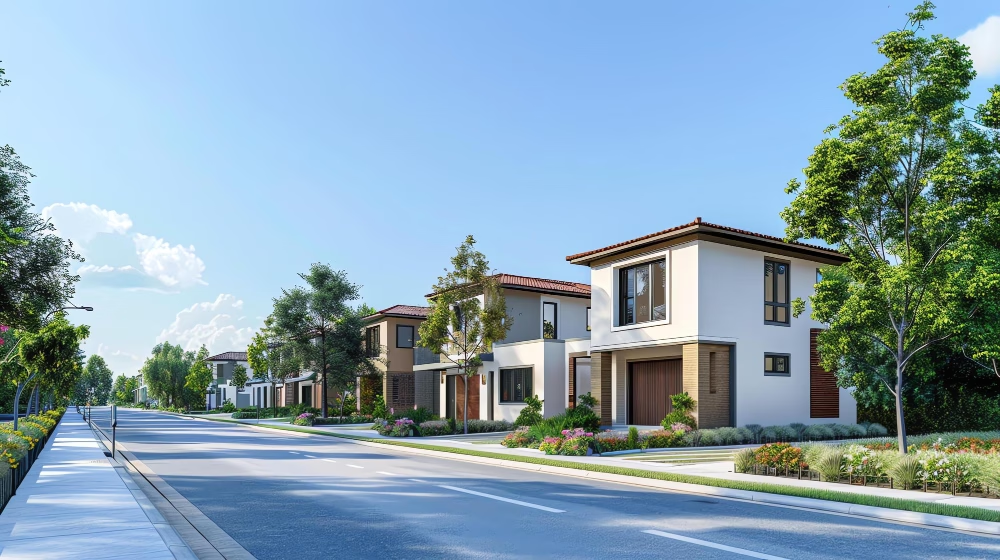
4. Testing Demand in a Luxury Property Development Marketing Strategy
Here is where sophisticated developers quietly outperform the rest. Before construction begins, they test demand.
They run pre-launch marketing campaigns, then they create early waiting lists, and they release teaser visuals and concept narratives to see how the market responds.
This process serves two critical functions: First, it confirms that buyers actually want the product being designed. Second, it begins building momentum and credibility before the project is completed.
Developments that sell out quickly rarely do so by accident.
They do so because the market has already been warmed up months, or sometimes years, before the first unit becomes available.
Without demand validation, even a well-designed luxury property development marketing strategy remains theoretical.
Related posts:
How to Budget Marketing for Your Koh Samui Business: A Simple Guide
Where Did All the Character Go? The Real Problem With Koh Samui Real Estate

5. Thinking Marketing Is Just Advertising
Advertising is only one piece of the system.
Real development marketing includes:
- brand positioning
- architectural storytelling
- buyer psychology research
- content strategy
- digital campaigns
- international visibility
- investor communication
The most successful developments treat marketing as a strategic discipline, not a promotional tool.
Because the goal is not simply to attract attention. The goal is to create desire among the right buyers. Facilitate the work of the sales team, and create brand followers, who are ready to invest in all your projects, because of their high trust.
Related posts:
How Much Should You Spend on Meta Ads? A Practical Guide for Property Marketing in Thailand
Crafting Irresistible Ads: The Koh Samui Entrepreneur's Mini Guide to Meta Ads Mastery

The Hidden Advantage of Strategic Marketing
Here is the paradox. When marketing is done correctly, it often feels invisible. Buyers simply feel that a property is special. Demand appears "naturally". The development sells faster than expected.
But behind that apparent simplicity lies a carefully designed strategy-one that began long before construction.
And that is the real difference between developments that struggle to sell and those that quietly sell out. Because in real estate, success is rarely determined by concrete or steel. More often, it is determined by the story the market believes about the property before it even exists.
One amusing paradox about this industry: developers spend years perfecting the architecture… yet the thing that actually sells the project is often a two-minute video and a well-written story. The physics of human attention is strange that way.
In reality, a luxury property development marketing strategy determines how efficiently a project converts attention into sales.