


If a few years ago, it was all fun and new, now Ai slop became really disturbing and annoying. Some social media were so infected by it, that for example LinkedIN has now a special button to complain on AI slop. The thing is that Artificial intelligence can create almost anything, and by now it looks really good, even thought it's still recognizable with the naked eye. But can AI generated content make your brand worth choosing? In marketing for hospitality and tourism, the difference between using AI and using it well could cost you customers.
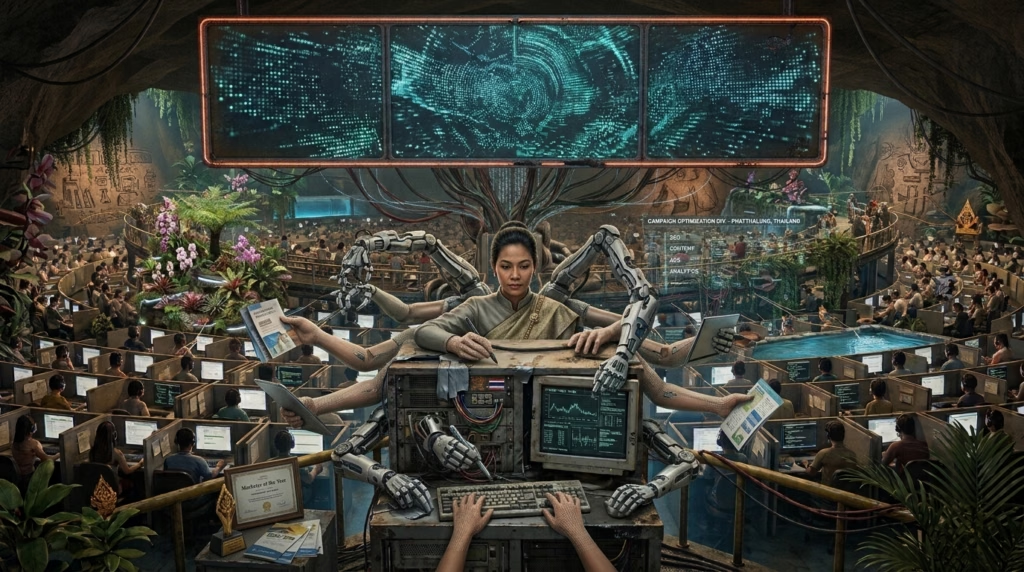
Everyone Has AI, but Not Everyone Knows how to use it
Let's face it, AI is everywhere. It writes captions, designs websites, generates photo & video, talk to you naughty and listen about your issue with this strange coworker. It may also build business and marketing strategies, generate images, and occasionally give people the confidence to call themselves experts overnight (the last one scares me the most).
When everyone has access to the same tools, access is no longer the advantage. But knowing what to ask and what do you precisely want, understanding what to accept or reject and how to set it up in the first place is what separates effective marketing from AI slop.
Ask an inexperienced person to generate a marketing strategy, and the answer might sound brilliant. Add professional experience, however, and suddenly those beautifully structured paragraphs start looking like a child confidently explaining something they don't really understand. And more you use it, more you recognise it.
Perhaps AI is exceptionally good at sounding convincing, but only convincing to those who have no idea what they are talking about. What I know for sure, being convincing and being correct are two really different things.
At FAMEsolutely, we use AI. We also know when not to use it. Because the future of marketing isn't about choosing between artificial intelligence and human intelligence with a sprinkle of over a decade of experience. The most important power today is Hybrid, it's about knowing how to combine the two the right way.
Related post: AI in Property Development Marketing: How to Turn Renders into High-Converting Ads
The Problem With AI-Generated Food Photography
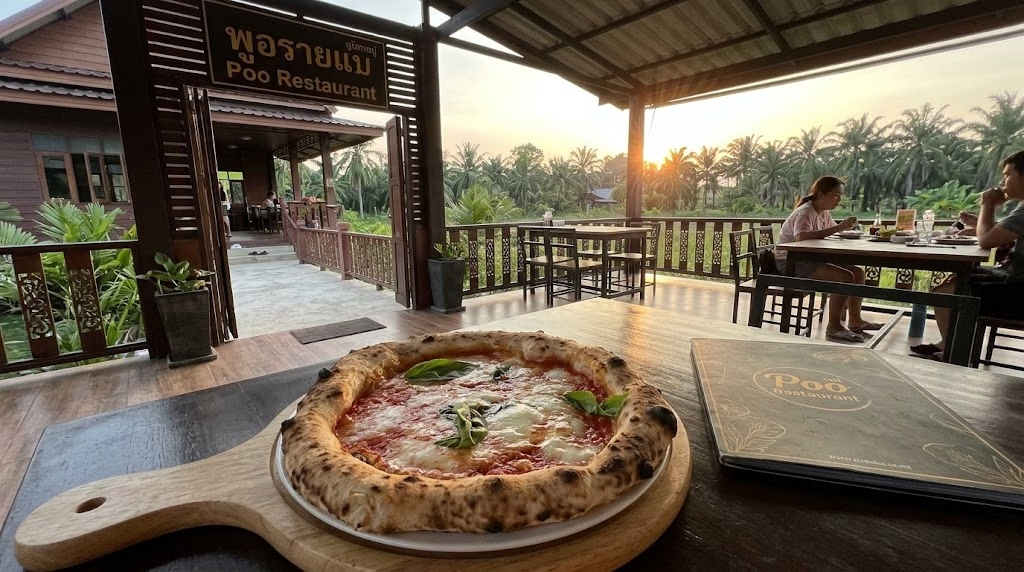
Let's talk about food. We love quality Food Photography, and it seems so logical, than a good restaurant will be able to show their real food. But unfortunately, not everyone with Chat GPT is a marketer.
Scroll through social media, and you'll see restaurants showing impossibly perfect dishes, cinematic sunsets (where there's no sunset by definition), and beautifully arranged tables that may never have existed outside a laptop, or maybe even just their phone.
Technically, some of these images are stunning. But the question is: would you trust a restaurant that couldn't show you what its food really looks like? Who want's to be catfished? One thing is when you see generated content from a known brand, with known quality standards, but the trust disappears when it's an unknown touristy place, which you are not even sure really exists.
Personally, if I'm choosing somewhere to eat, I want to see the real experience. The actual pasta, even if it's the classic Carbonara one, I also want to see the real atmosphere, and where will be the table where I'll spend my evening.
If a restaurant needs artificial intelligence to make its food look appealing, what exactly am I being invited to experience? Especially if the place is positioning itself as something more than average.
What about trust?
Marketing is supposed to build trust before the customer arrives, it's not only professional ethics, but by law the customer should see what she/he is paying for. If your content creates expectations your business cannot meet, you've achieved the opposite of success, you risk to get unhappy customers who will want to complain, maybe leave a bad review, maybe spread the bad word to all their friends.
Of course, AI-generated food photography can work when it's part of a deliberate creative concept, or when it represents your dishes at 100%. Then an imaginative campaign doesn't necessarily need to represent a literal dining experience. But there's a difference between selling an idea and misrepresenting a product.
True creativity and deep understanding of the customers needs and behaviours, with a human made authenticity will help a business earn customers trust faster. Because AI slop is the opposite of creativity and authenticity.
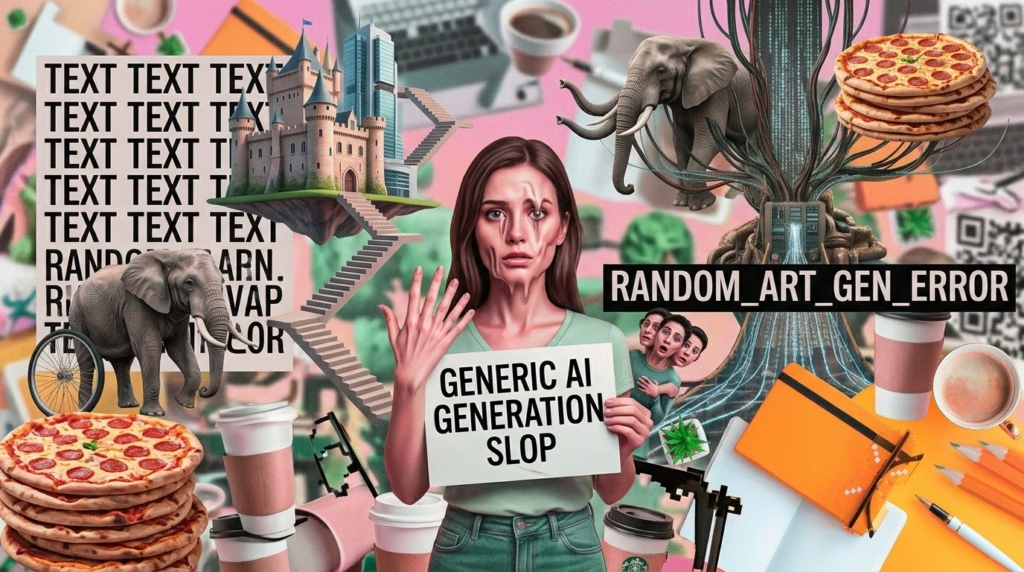
What is AI slop?
AI slop is low-quality, generic, or hallucinated AI-generated content churned out for mass volume. Similar to fast food or fast fashion, something created quickly but with questionable value, usually created for the mass market.
The problem is that the amount of AI slop is increasing. In fact, research by Meltwater found that in 2025, mentions of “AI slop” online increased ninefold from the previous year, with negative sentiment hitting a high of 54%.
And it’s having an impact across nearly every industry. Publishers are facing a deluge of rip-off books and made-up reviews, trusted online resources are being inundated with AI-generated answers, social media platforms are having to create new AI detection tools like those on Pinterest, and fake bands are infiltrating playlists. (source)

Your Customers Aren't Just Buying a Product, They're Buying an Expectation
Imagine you're single and browsing a dating app. Then you find a beautiful person with perfect skin and deep green eyes. Then you suddenly notice that those photos are AI-generated. Now, you're not wondering how attractive this person is anymore, but whether anything about this profile is real, is the person real, will you be kidnapped, or are you part of someone's prank?
A date requires an effort, and also time, money, and a little trust. Why would you invest those precious things in someone whose first impression was misleading? The same principle applies to hospitality marketing.
You see, a restaurant isn't simply selling a meal, it's selling an evening; a beach club is selling an atmosphere, drinks, and delicious meals; and a resort is selling the promise of an escape into an unforgettable experience. Customers nowadays want to know what they're paying for.
In destinations like Koh Samui, Phuket, or any other resort destination, this becomes particularly important. Local residents and expats choose according to their budgets, tastes, and preferences. But Tourists face another limitation: time. Someone visiting Koh Samui for ten days has only so many lunches, dinners, and evenings to enjoy. Every choice competes for a limited space in their itinerary. Why should they choose your restaurant over the one next door?
When customers have limited time, your marketing must help them imagine a real experience worth choosing.
If 2025 was the year AI-generated content flooded social media platforms, 2026 will be the year both brands and creators truly reckon with it, 2027 hopefully we will reach a balance between the two.
As influencer marketing agency Billion Dollar Boy reports, only 26% of consumers prefer generative AI creator content to traditional creator content, and that’s down from 60% in 2023.(Source)

AI Slop Is Becoming Easier to Recognise
Remember when AI-generated photos of people had 6 fingers and text looked unrealistically polished? Like the "Email from a Prince who wants to donate you his millions", the scam mail we all received back in the 2010s. A few years ago AI sounded the same. The paragraphs were neat, the language too sophisticated, and every caption seemed to have been written by a particularly enthusiastic corporate consultant. Then everyone started over-using it.
Now, the internet is saturated with repetitive expressions, predictable storytelling, generic brand voices, and content that says a great deal without communicating anything particularly meaningful. Just some "fluff" to satisfy the algorithms, without thinking about the users and future customers. Same as the word "fluff", have any other non-native English speaker heard of it ever before 2024? I never did...
The problem isn't that every AI-assisted captions are always bad, it's that publishing more content has become easier than creating something worth reading.
Search engines and AI-powered discovery systems also need to determine whether content offers genuine value. Google doesn't automatically penalise content simply because AI helped create it. However, content produced at scale without originality, accuracy, or meaningful value can struggle to earn visibility.
The lesson is simple: publishing more isn't the same as becoming more discoverable.

When AI Actually Makes Marketing Better
At FAMEsolutely, we believe AI is most effective when it solves a real problem or enables a creative idea that would otherwise be difficult to execute.
Consider a few examples.
- Improving existing photography. If an original photo of a beautiful dish is rectangular but a social media format requires a square, AI can extend the background while preserving the authentic photo. The technology supports the original creative work rather than replacing reality.
- Visualising unbuilt properties. For property developers marketing villas, resorts, or condominiums that don't yet exist, AI-generated visualisations can communicate the intended result. The audience understands that the building is proposed, not completed. Transparency makes the difference.
- Creating imaginative brand characters. Perhaps your resort has a mascot, or your restaurant wants a charming capybara to introduce its menu. AI can bring that character to life. Nobody expects a real capybara to explain the lunch specials.
- To show a feeling, like the feeling to be cared for in a restaurant.
- Supporting research and creative development. AI can help explore ideas, organise information and accelerate repetitive tasks. Human expertise remains essential for checking facts, challenging assumptions, refining the message, and deciding what deserves to be published.
In each case, the technology has a purpose, it's not there simply because everyone else is using it.

The Future Belongs to People With Taste and different perceptions
AI can generate thousands of images, articles, and campaigns, but volume has never been the same as value.
The real competitive advantage lies in knowing what makes a brand special, understanding its customers, recognising quality, and making decisions that connect creative work to business results.
Taste matters, not less than Experience or Strategy. An extra bonus if you are neurodivergent, according to Palantir CEO Alex Karp neurodivergent workers will thrive in the AI era. An autistic psychologist says he has a point.
Most importantly, someone needs to recognise when the AI generated result looks impressive but makes absolutely no sense.
At FAMEsolutely, we use AI as a tool within a human-led marketing process. We combine technology with industry knowledge, creative direction, and a clear understanding of what customers need to see before they decide to spend their money.
Because no business wants to invest thousands of baht in social media marketing only to discover that its beautiful content generates likes but no trust, no meaningful enquiries, and no new customers.
AI is powerful, but Human judgement makes it effective.
The question isn't whether your business should use artificial intelligence, it's whether you have the expertise to make that intelligence work for your brand.
And that is where the real marketing begins.